
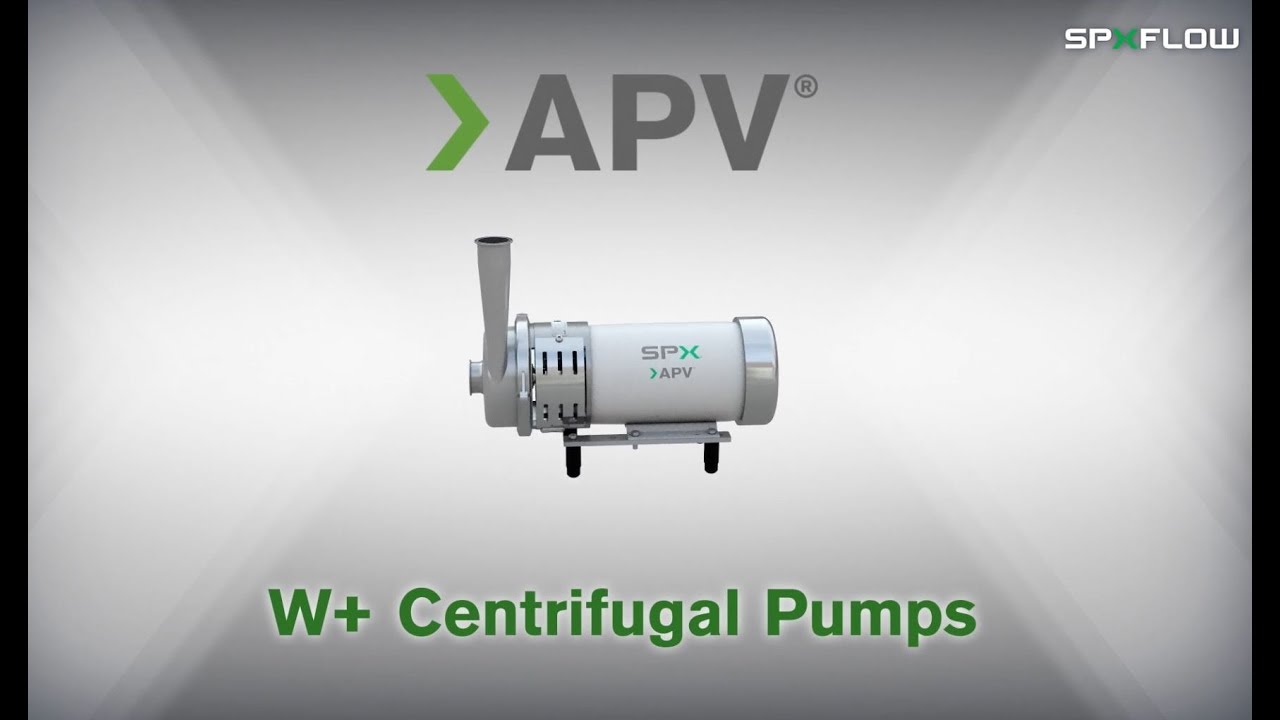
The WS+ Series combines features of a liquid ring pump with the efficiency of the W+ centrifugal design. This hybrid approach allows it to handle entrained air, priming, and suction-lift applications with lower horsepower requirements, reduced noise, and greater energy efficiency—capabilities the standard W+ does not offer.
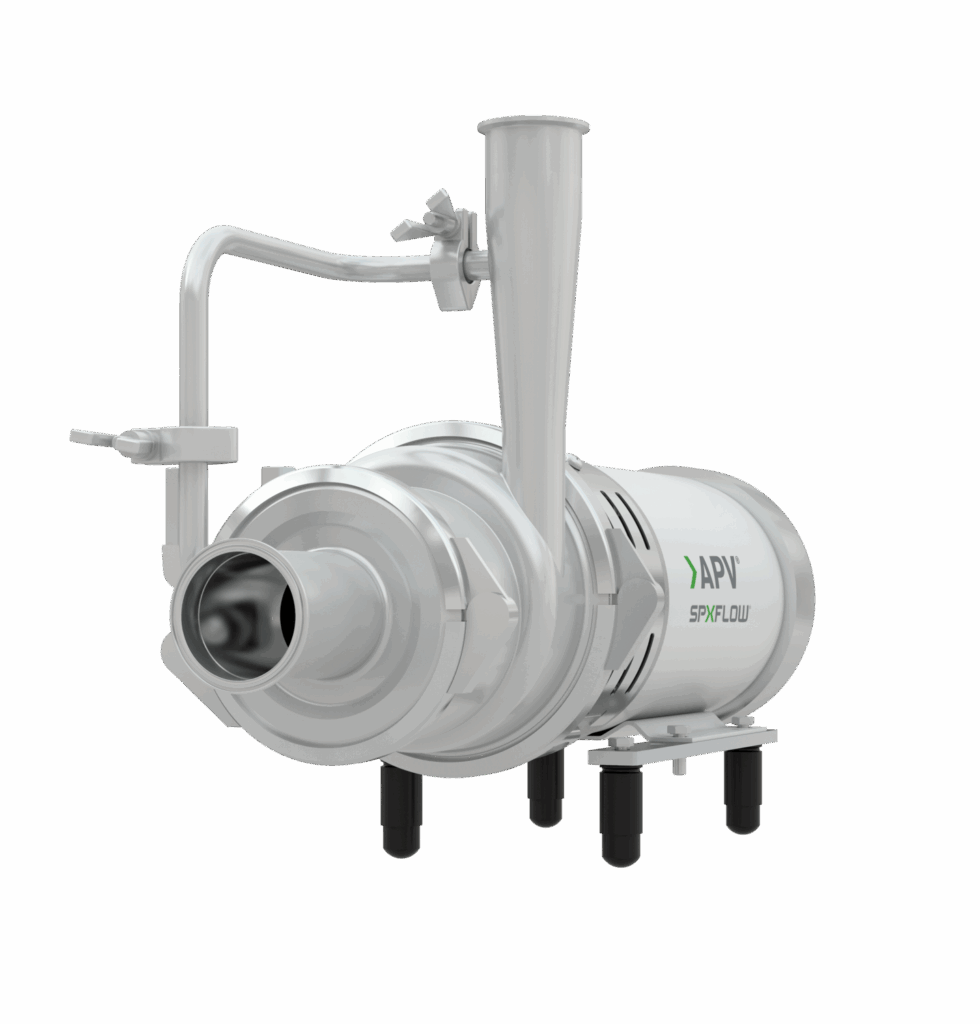
APV WS+ Series Pump
Product Overview
The WS+ uses a unique design that combines the abilities of most liquid ring pumps with the efficiencies of the W+ centrifugal series. As a result, customers can now handle entrained air and lift requirements with lower horsepower, less noise, and at lower cost.
APV WS+ Series Pump
Key Features
- Self-priming design handles CIP return and other fluids with entrained air and foam.
- Built-in eccentric air screw forms the liquid ring required for self-priming capability.
- High-efficiency impeller can be trimmed to match a specific duty, optimizing performance.
- 20–90% more efficient than other liquid ring pumps thanks to improved fluid flow through the pump.
- Hydraulic design delivers a low noise level, significantly quieter than traditional liquid ring pumps.
- 3-A (optional) and EHEDG approved as a hygienic pump, suitable for CIP and first-class hygienic product service.
- Interchangeable with W+ parts, reducing inventory by sharing common components.
- Less prone to damage; small objects can pass through the pump with minimal impact.
- Ws+ series includes three sizes: Ws+ 20/15, Ws+ 30/30, and Ws+ 44/50.
- At 50 Hz: up to 94 psi (6.5 bar) and 396 GPM (90 m³/hour).
- At 60 Hz: up to 138 psi (9.5 bar) and 484 GPM (110 m³/hour).
We’re Here to Help
Get personalized support for pump selection, sizing, and applications.
Theory of Operation:
Centrifugal Pumps
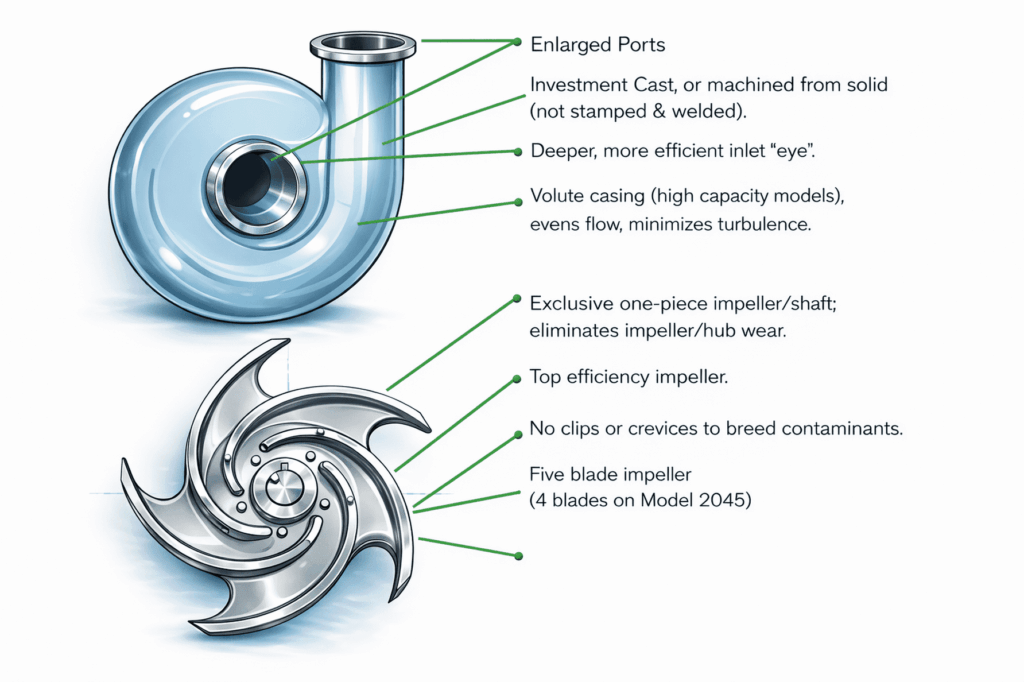
A centrifugal pump operates by converting mechanical energy from a rotating impeller into kinetic energy within the pumped fluid. In sanitary centrifugal pumps such as those from Waukesha and APV, fluid enters the pump through the inlet eye at the center of the impeller. As the impeller rotates at high speed, centrifugal force accelerates the fluid radially outward along the impeller vanes, increasing its velocity.
This high-velocity fluid then enters the volute casing, where the expanding geometry converts velocity into pressure, producing a smooth, continuous flow at the discharge. The precision-machined volute, enlarged ports, and hygienic impeller designs used in Waukesha and APV pumps help minimize turbulence, reduce shear, and improve efficiency, making them ideal for sanitary applications requiring gentle product handling, cleanability, and consistent flow performance.
Key Applications
Food & Beverage
Batters
Fats & Oils
Flavorings
Sweeteners
Yeast Slurry
Syrups
Dairy
Cream
Milk
Cheese Curd
Whey
Cottage Cheese
Yogurt
Pharmaceutical & Cosmetics
Emulsions
Extracts
Slurries
Syrups
High Purity Water WFI (Water for Injection)
Dyes
Alcohols
Essential Oils
THC and CBD
Chemical & Industrial
Detergents
Dyes
Soap Liquors & Solutions
Ammonium Nitrate
Propyl Alcohol
Potassium Chloride
Sodium Acetate
Frequently Asked Questions
The WS+ excels in processes where air entrainment, foaming, or fluctuating inlet conditions are common—such as CIP return, receiving lines, and transfer applications. Its ability to self-prime and maintain stable flow under challenging suction conditions makes it ideal for dairies, beverage plants, and facilities requiring reliable air-handling performance.
We’re Here to Help
Get personalized support for equipment selection, sizing, and applications.